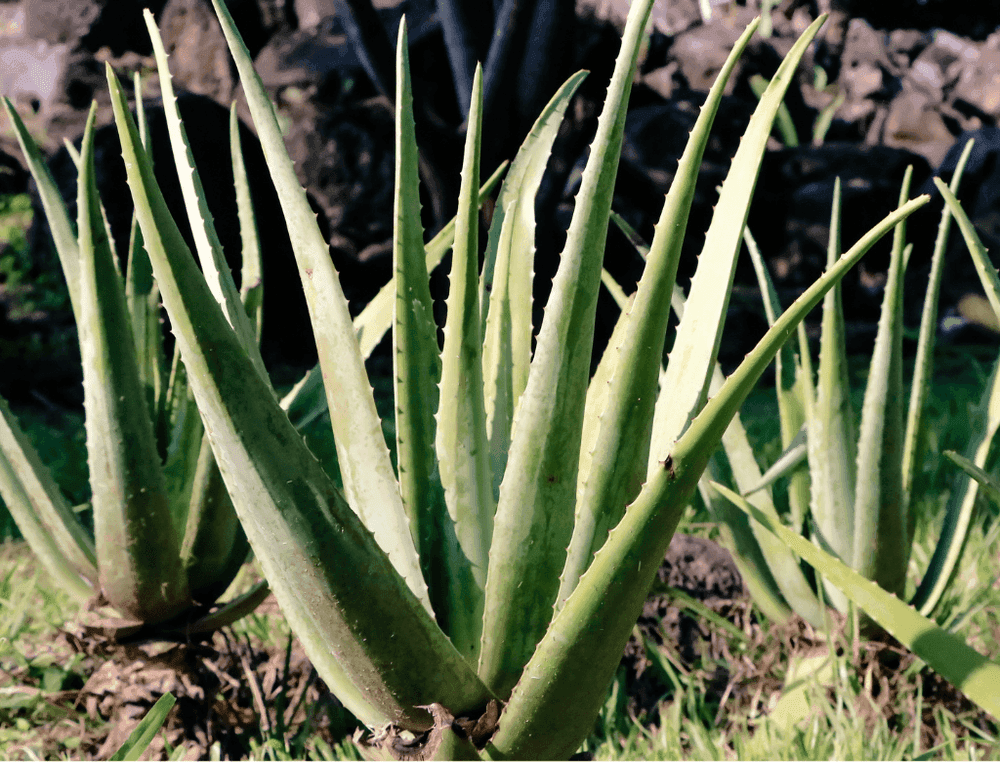
Aloe vera (Aloe barbadensis Miller) is an ancient medicinal plant, used for over 5,000 years worldwide for its healing and regenerative properties. Whether it's to soothe skin, support digestion, boost immunity, or regulate metabolism, this plant is rich in valuable active ingredients. But to reap all its benefits, it's essential to ensure the quality of the product : pure, undiluted, and unpasteurized.
In this article, we offer a complete and rigorous overview of Aloe vera, based on the most recent scientific data.
A unique composition: the active ingredients of Aloe vera
The translucent gel found inside Aloe vera leaves is more than 99% water. However, its main therapeutic benefits lie in the remaining 1% . This fraction contains an exceptional wealth of natural active compounds:
- Polysaccharides , including acemannan, a complex sugar recognized for its immunostimulating, healing and anti-inflammatory properties.
- Phytosterols , such as lophenol and cycloartanol, which play a role in the regulation of cholesterol and metabolism.
- Anthraquinones , including aloin (present in latex) and aloe-emodin, with laxative but also antimicrobial and antiviral effects.
- Enzymes , such as amylase, bradykinase and catalase, which support digestion and reduce inflammation.
- Vitamins (A, C, E, B1, B2, B6, folic acid) and minerals (calcium, magnesium, zinc, potassium…) essential for the proper functioning of the body.
- Polyphenols and flavonoids, which enhance the overall antioxidant action of the plant.
This synergy of active ingredients explains the multiple effects of Aloe vera, both when used externally and internally.
Scientifically proven benefits
A remarkable healing and anti-inflammatory effect
Aloe vera gel is widely used to treat burns, cuts, stings, and various skin irritations. Clinical studies have shown that it accelerates healing by promoting tissue regeneration, particularly thanks to acemannan, which stimulates collagen production and skin cell migration. Furthermore, the enzymes it contains, such as bradykinase, help reduce local inflammation.
A literature review published in the Journal of Ethnopharmacology highlights the effectiveness of the gel in the management of second-degree burns, with a significant reduction in healing time compared to conventional care.
A powerful natural antioxidant
Thanks to its richness in polyphenols, vitamins C and E, and antioxidant enzymes (such as superoxide dismutase), Aloe vera helps to neutralize free radicals responsible for premature aging and degenerative diseases.
Studies show that its regular consumption increases the antioxidant capacity of the plasma, thus strengthening the body's natural defenses.
Blood sugar and metabolism support
Clinical trials conducted on patients with prediabetes or type 2 diabetes revealed a significant reduction in fasting blood glucose and HbA1c after several weeks of consuming pure Aloe vera gel. The phytosterols and polysaccharides contained in the plant appear to act directly on glucose and lipid metabolism.
A meta-analysis published in 2016 in The Journal of Clinical Pharmacy and Therapeutics indicates that Aloe vera could be an effective natural adjuvant in the management of diabetes.
A digestive and soothing action
When used internally, Aloe vera gel is known to soothe digestive problems, including gastroesophageal reflux, acidity, and intestinal irritation. It forms a protective layer on the digestive lining while regulating bowel movements, provided it is free of latex (aloin), which has an overly strong and potentially toxic laxative effect.
A comparative study demonstrated that taking Aloe vera syrup daily for 4 weeks was as effective as omeprazole in relieving the symptoms of gastroesophageal reflux, without the side effects associated with PPI drugs.
An antiviral and antimicrobial action
Certain compounds in Aloe vera, notably aloesin and aloe-emodin, have shown promising antiviral effects against herpes, influenza, and some coronaviruses in laboratory studies. The gel is also naturally antibacterial and antifungal, which enhances its effectiveness when applied topically.
The crucial importance of quality
Not all aloe vera gels are created equal. To fully benefit from its properties, it's essential to choose a high-quality product. Here's why:
Choose a gel that is more than 99% pure, with no added water
Many industrial products contain large quantities of water, thickening gums, or preservatives. This significantly dilutes the concentration of active ingredients. Opt for certified gels with a high content of natural pulp , ideally from fresh leaves, without chemical treatment.
Avoid pasteurized or heated products
Heat destroys many of the enzymes and polysaccharides responsible for the beneficial effects of Aloe vera. Opt for a cold-stabilized or minimally processed gel to ensure the preservation of bioactive molecules.
Beware of the presence of latex (aloin).
The yellow latex located beneath the bark contains aloin, an anthraquinone that is highly irritating to the intestines and classified as a possible carcinogen (Group 2B) by the WHO. Make sure that the gel you consume is latex-free , and therefore extracted only from the heart of the leaf .
Precautions for use and contraindications
- Allergies : perform a skin test (patch) before general use, especially in case of allergy to latex or plants of the Asphodelaceae family.- Laxative effects : if the product contains residual latex, it may cause diarrhea, cramps, electrolyte imbalance, especially if consumed in excess.
- Pregnancy : avoid any form containing aloin (risk of uterine contractions).
- Drug interactions : Oral aloe may interact with antidiabetics, diuretics, digoxin, and anticoagulants.
- Prolonged consumption of whole, unpickled leaves : classified as a possible carcinogen by the IARC (WHO) – category 2B
In conclusion
Aloe vera is an exceptional plant, capable of acting on multiple levels of natural health: skin, digestive system, immunity, metabolism… But to get the best from it, it is essential to choose a high quality product, pure, unpasteurized, and without aloin .
At Natflow , we recommend paying particular attention to the origin, concentration, and processing method of the Aloe vera you consume. Your health deserves the uncompromising excellence of nature.
Sources:
Vogler BK, Ernst E. (1999). Aloe vera: a systematic review of its clinical effectiveness . British Journal of General Practice.
Hekmatpou D, et al. (2019). The Effect of Aloe Vera Clinical Trials on Cutaneous Wound Healing . Journal of Traditional and Complementary Medicine.
Surjushe A, et al. (2008). Aloe vera: A short review . Indian Journal of Dermatology.
Saini R, et al. (2010). Aloe vera: A plant of therapy . Journal of Oral Health and Community Dentistry.
Huseini HF, et al. (2012). The clinical efficacy of Aloe vera gel on glycemic control in prediabetic patients . Phytomedicine.
Choudhary D, et al. (2016). Efficacy of Aloe vera gel in the management of prediabetes and diabetes mellitus: a systematic review and meta-analysis . Journal of Clinical Pharmacy and Therapeutics.
Lin JY, et al. (2005). Antiviral effects of Aloe-emodin on influenza A virus . Journal of Food Science.
IARC Monographs (2015). Aloe vera whole leaf extract – Group 2B carcinogen . International Agency for Research on Cancer (WHO).
Shelton RM. (1991). Aloe vera: Its chemical and therapeutic properties . International Journal of Toxicology.
Boudreau MD, Beland FA. (2006). Evaluation of the biological and toxicological properties of Aloe barbadensis (Aloe vera) . Journal of Environmental Science and Health, Part C.